Reply Faster to Emails: 7 Habits That Compound
Email is the slowest channel to answer because it invites you to write essays. These seven habits cut the time without making your replies worse.
1. Answer the first read, or schedule it
Every email has one of three fates: reply now (under two minutes), reply later (needs research), or no reply needed. Decide on first read and move it. The cost of email is not writing, it is re-reading.
2. Start with the answer
“Yes — Thursday works.” Then context. Readers on phones see the first line only, and burying the answer doubles the chance of a follow-up question.
3. Cap the length at five sentences
Most professional emails need three. If yours needs twelve, it probably needs a call.
4. Keep the twelve paragraphs you send most
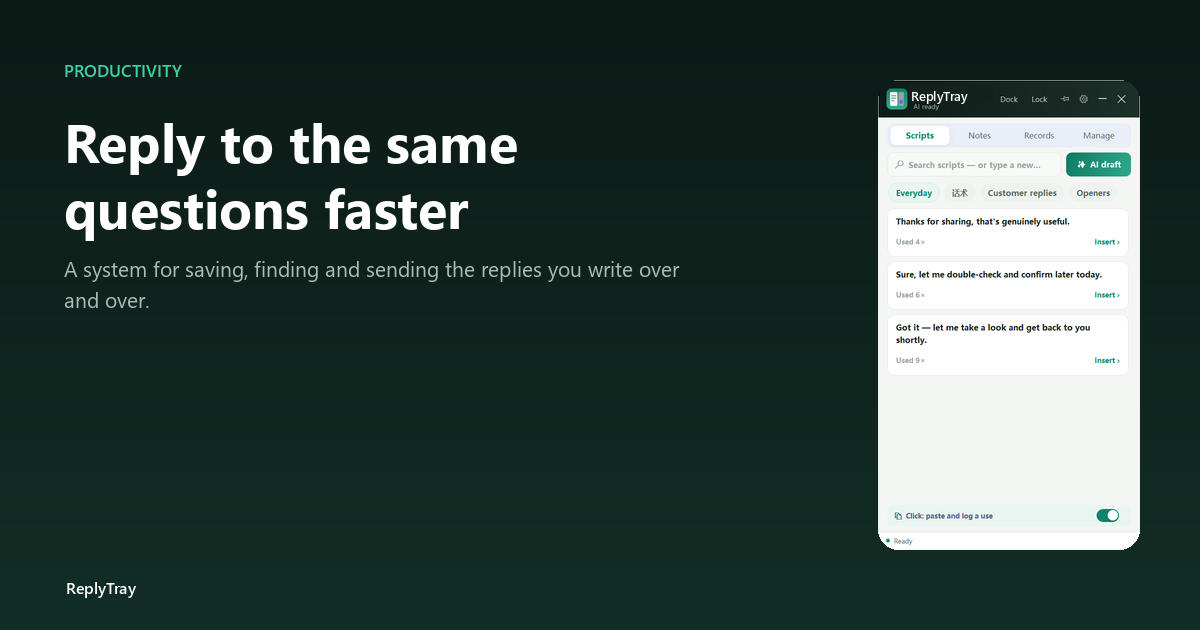
Pricing, availability, how-to, apologies, onboarding steps. They do not change much; you retype them weekly. Store them where you can insert one in a click — Quick Parts, a text expander, or a panel. Outlook specifics here.
5. Reply in the same thread, same subject
New threads split history and force both sides to re-explain. Unless the topic genuinely changed, stay in thread.
6. Use a two-line signature
Name, role, one link. Long signatures are read once and ignored forever, but they add visual weight to every reply and make short answers look dismissive.
7. Batch twice a day
Email is the most interruptible channel and the least urgent. Two windows — late morning, end of day — beat continuous monitoring on every metric except the feeling of being responsive.
The one that surprises people
Answering faster does not increase volume. Most people fear that replying quickly invites more email; in practice it shortens threads, because the other side stops sending clarifying questions while waiting.
What compounds
Habits 2 and 4 are the ones that scale: a stored library of your most-sent paragraphs removes the writing, and leading with the answer removes the follow-up. Everything else is tidying. The full system.